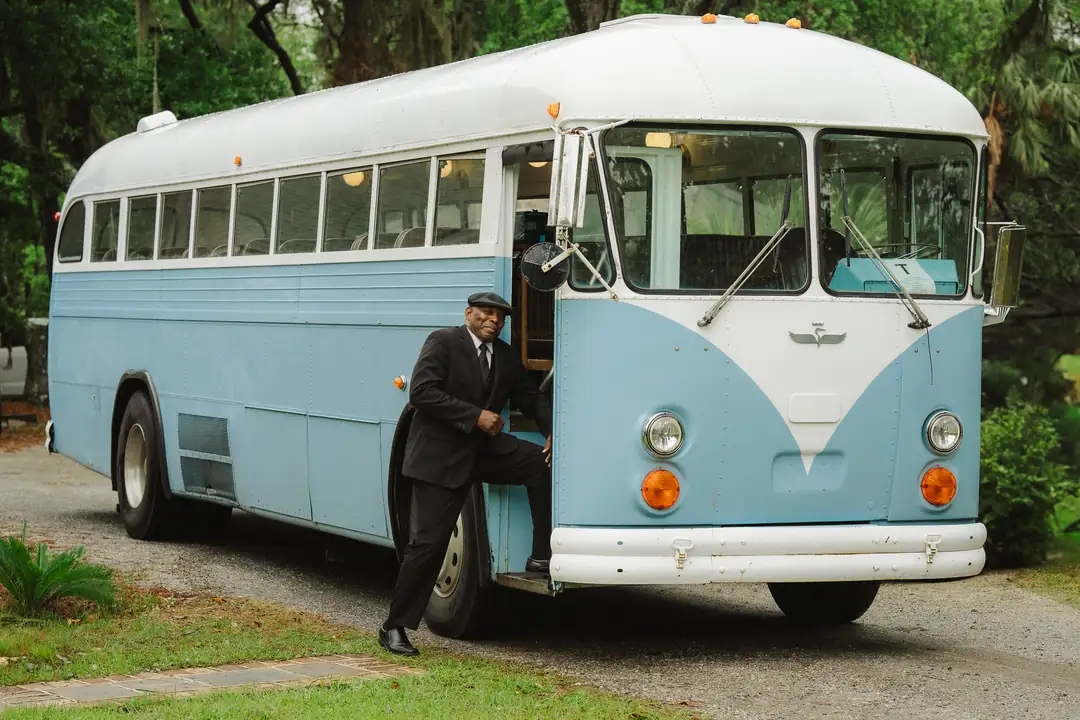
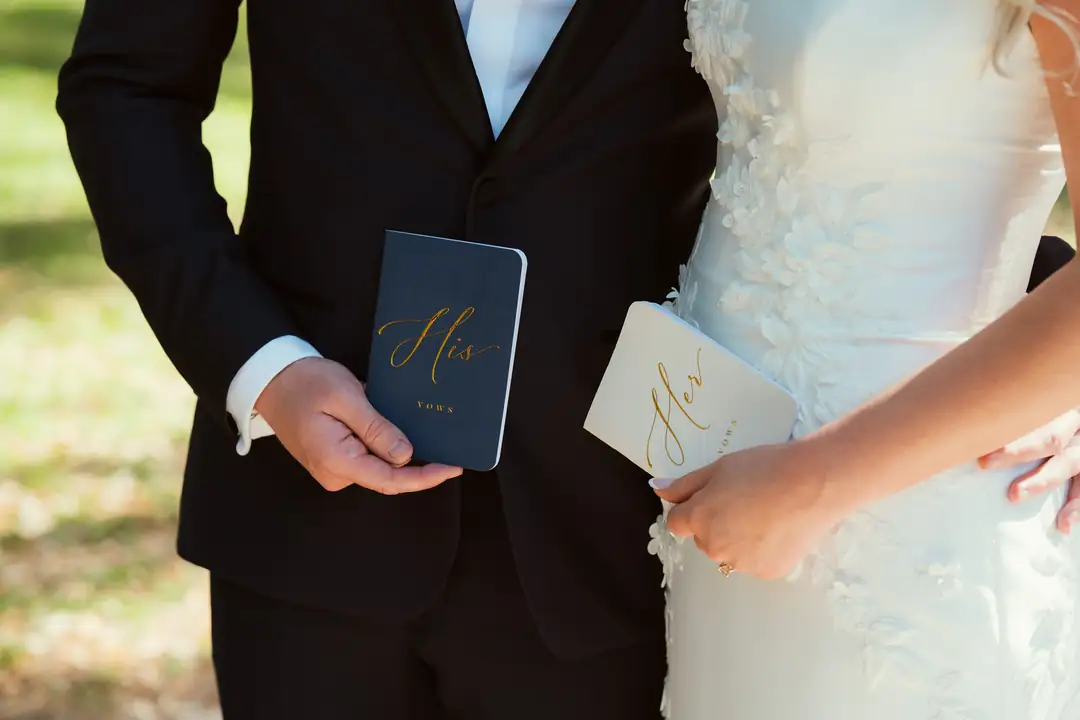
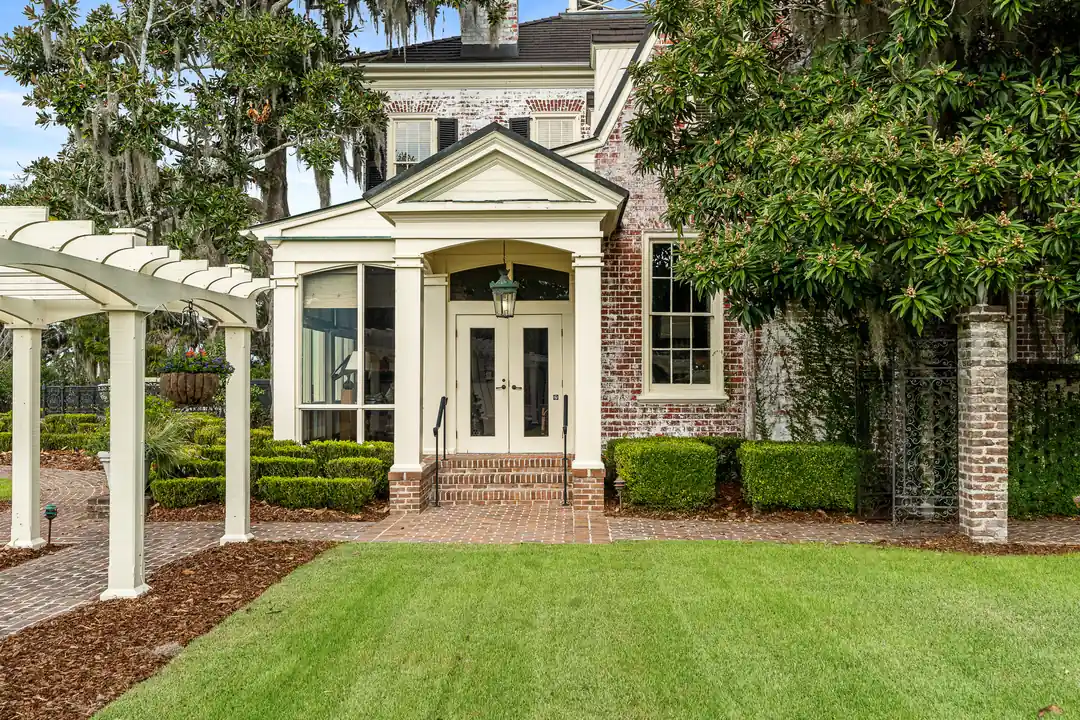
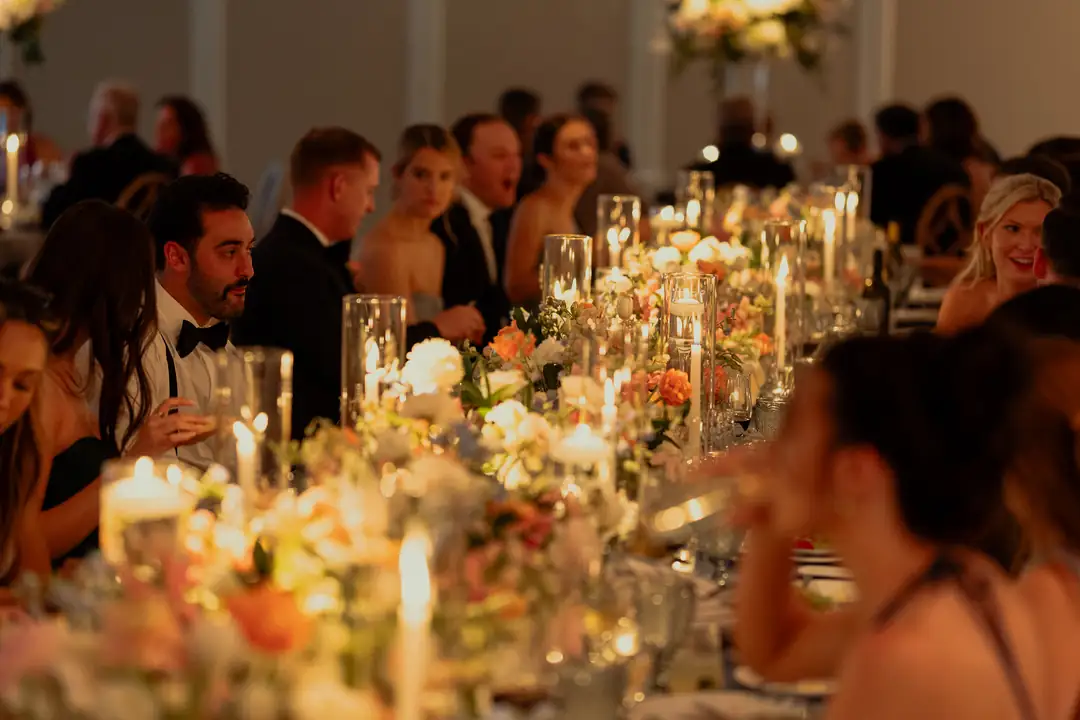
Documentary coverage of the whole day — half day, full day, or the whole weekend.
Wedding Photographer: Documentary Coverage of the Whole Day
Hiring a wedding photographer is the one vendor decision you cannot redo. The flowers wilt, the cake gets eaten, and the photographs are what is left. Fisher Film & Photo is Abby Fisher, photographing weddings in Charleston and wherever else couples lead.
The work at Fisher Film & Photo is documentary at heart. The camera watches for the moment a father sees his daughter, the laugh that escapes during vows, the quiet minute you two steal before the reception swallows you. Those frames are not staged and cannot be recreated.
There is direction when direction helps, family groupings, portraits in good light, keeping a timeline moving. The rest of the day Fisher Film & Photo stays out of your way and photographs what is actually happening.
Photography coverage and pricing
Three collections, each defined by how much of the wedding day gets covered.
The Essentials, $3,500 for eight hours. Half a day, usually ceremony through early reception.
The Full Day, $5,000. Getting ready to last dance, no clock-watching.
The Weekend, $6,500. Multi-day coverage for weddings that run across several events.
Adding video to your photography
Fisher Film & Photo shoots film as well as stills. Eight hours of videocosts $4,000; extend to a full day and it is $6,000; a whole weekend comes to $8,000. A short highlight film adds $2,250, sold only alongside photography, since it is edited from footage of a day already being covered.
Booking one person for both matters more than couples expect. Two separate crews mean two sets of angles being negotiated mid-ceremony. One artist covering both means the photographs and the film tell a single story.
Knowing the light, the weather, and the venue
Charleston is a difficult, rewarding place to photograph. Live oaks throw dappled light that flatters some faces and ruins others. Summer humidity fogs a lens the second you step outside air conditioning. Afternoon storms arrive and leave inside an hour.
Knowing the city means knowing where the light lands at five o'clock in October, which historic streets stay walkable in heels, and how quickly the Lowcountry sky turns after a downpour. Local experience is mostly just knowing what is about to go wrong.
Elopements and small weddings
Not every marriage begins with two hundred guests. The Essentials collection covers elopements comfortably, and a microwedding gets the same attention as a large one. Fewer people usually means stronger photographs, because nobody is performing. An elopement photo session can be the whole day.
Destination weddings
If your wedding happens somewhere else, Fisher Film & Photo travels. Destination weddingphotos follow the same approach as a Charleston wedding: arrive early, learn the venue, stay invisible, and shoot the day as it unfolds.
Portraits before the wedding
An engagement photo session and bridal portraits are the warm-up. The Essential is $500 for one hour and a single look; The Signature is $750 for two hours and two looks. Full-day wedding couples can add a session on, and portrait photography before the day is the simplest insurance against stiffness on it.
The same applies afterwards. Wedding album design turns a gallery of files into something a bride can actually hand to her mother.
Shooting together beforehand removes the awkwardness. By the wedding Fisher Film & Photo already knows how you two move, and you already know nothing ridiculous is coming.
Why the background matters
Fisher Film & Photo was founded by an illustrator, with a BFA from Art Center College of Design. That is a compositional education rather than a technical one, and it shows in how frames get built, what is included, what is cropped away, where the eye lands first.
Before photography came construction work, and before that a rural Indiana childhood showing and training American Quarter Horses. Neither is a photography credential. Both taught patience and reading a situation quickly, which is most of this job.
What to ask any wedding photographer
Ask to see one complete wedding, start to finish, not a portfolio of highlights. Every photographer in the wedding industry can assemble ten good frames from a decade. A full gallery shows what an ordinary wedding looks like in their hands.
Ask what they actually shoot. Some wedding photographers only do stills; others sub out videography to a stranger. If drone photography matters to you, ask about that too, because not everyone offers it.
Ask what happens if they are ill. Ask how long delivery takes. Ask whether the person you meet is the person shooting your day. Then compare answers.
How a wedding day actually runs
Coverage is sold in hours, but hours stay abstract until they are mapped onto a real day. Most Charleston weddings follow a familiar shape, and knowing it makes the choice between eight hours and a full day concrete rather than theoretical.
An eight-hour block usually starts an hour or two before the ceremony. That catches the end of getting ready, the details, a first look if you want one, the ceremony, family and wedding party portraits, cocktail hour, the entrance, the first dance and the toasts. It ends somewhere in the middle of the reception, before the dancing has fully taken over and well before the send-off.
A full day starts with an empty room and ends with the last song: the dress on its hanger, the mothers zipping and fussing, the long quiet stretch where nothing is happening and everything is being felt, the letters read alone, the exit at the end. Nothing is bought back later, and nobody watches the clock.
The honest way to choose is to write the timeline first and then count. If the ceremony is at four and the send-off is at ten, eight hours does not reach both ends of the day with any room to spare. If ceremony and reception share one venue and the party is short, eight hours is generous.
What documentary coverage means in practice
Documentary is a word every wedding photographer uses, so it is worth defining by what actually happens on the day.
It means the ceremony is photographed from where it can be seen, not from the aisle in front of the guests. It means the moment a grandmother reaches for a hand is caught because someone was watching her rather than arranging a group. It means the reception is covered as it happens, not stopped every twenty minutes to stage a picture.
It does not mean an absence of direction. Family groupings are organised and shot efficiently, because thirty relatives left to arrange themselves will consume an hour. Portraits are directed toward good light. A timeline is kept moving when it slips. Direction is applied where it genuinely helps and withdrawn everywhere else.
The difference shows up in the gallery. Heavily posed coverage produces a set of portraits with gaps between them. Documentary coverage produces a day with a beginning, a middle and an end, where the portraits sit inside the story instead of replacing it.
Charleston venues and what each one asks for
The city offers several distinct kinds of wedding venue, and each changes how the day gets photographed.
Historic downtown houses and courtyards. Beautiful, tight and often dim. Ceremonies happen in walled gardens under live oaks, which means dappled light and hard contrast in the early afternoon. These reward a photographer who already knows which corner holds soft light at five o'clock.
Plantation and estate grounds. Long avenues, open lawns, and a lot of walking between locations. Timelines here need travel time built in, and the light at the far end of the property is rarely the light at the house.
Beach and waterfront ceremonies. Wind, glare, and a horizon that blows out if it is metered carelessly. Sunset is the whole point, and sunset does not wait for a delayed processional.
Modern event halls and rooftops. Controlled and predictable, with lighting that is usually artificial and coloured. A flash decision made early determines how the whole reception looks.
Churches and cathedrals. Often the strictest. Many restrict where a photographer may stand and whether flash is permitted at all, which is worth confirming with the officiant long before the day.
Venue knowledge matters most for timing. Someone who has worked a venue knows how long the walk from ceremony to portrait spot really takes, and builds the timeline around the answer instead of discovering it on the day.
Charleston weather is a planning problem more than an aesthetic one. Summer humidity fogs a lens the moment it leaves air conditioning, which costs minutes if nobody anticipated it. Afternoon storms arrive fast and leave just as fast. Hurricane season overlaps with peak wedding season.
The practical answer is a wet-weather plan agreed in advance: where the ceremony moves to, how long the move takes, and who decides. Weddings that have that conversation early lose nothing to a downpour. Weddings that have it at two in the afternoon lose an hour.
Light is the other variable worth planning around. Golden hour shifts by more than two hours between June and December, so a timeline copied from a friend's summer wedding will not work for an autumn one. Checking sunset time for the actual date, before the reception schedule is fixed, costs nothing.
Choosing between the three collections
The collections differ in coverage, not in approach. The same documentary method applies whether the booking is eight hours or a whole weekend.
The Essentials at $3,500 suits a single-venue wedding with a compact timeline, an elopement, or a couple whose priority is the ceremony and the early reception. It is the right choice more often than couples expect, particularly when the party runs late but predictably.
The Full Day at $5,000 suits a wedding spread across more than one location, a getting-ready story that matters, or an evening that ends with something worth photographing. If the decision has become which end of the day to give up, this is the answer.
The Weekend at $6,500 suits multi-day celebrations: a welcome dinner, the wedding, a farewell brunch. It is also the sensible choice for destination weddings, where travel is already committed and the surrounding days carry as much of the story as the ceremony itself.
For reference, Fisher Film & Photo's own blog notes that Charleston wedding photographers generally price in the $2,500 to $4,500 range for a wedding. Where a quote sits against that says something about coverage length and experience, and nothing on its own about whether the photographs will be any good.
Building the photography timeline
Most timeline problems are the same problem: portraits are given fifteen minutes and need forty. Working backwards from sunset, rather than forwards from the ceremony, solves most of it.
A workable order for a single-venue wedding looks like getting-ready coverage, then a first look if there is one, then wedding party and family portraits, then the ceremony, then couple portraits in the last good light, then the reception. Front-loading the portraits means the group photographs are done while everyone is still assembled and nobody has wandered to the bar.
The first look is the single decision that most changes a timeline. Doing one moves the bulk of the portraits before the ceremony, which usually returns an hour of cocktail hour to the couple. Skipping one preserves the moment at the aisle, and the portraits compress into the window between ceremony and reception. Neither is wrong; they just produce different days.
Family groupings deserve a written list. A named list, held by someone who knows the faces, turns a thirty-minute scramble into a ten-minute sequence. Without one, the same relatives get chased across a lawn while the light goes.
What arrives afterwards
The gallery is the deliverable that outlives the day, and it is worth asking any photographer three things about it: how long delivery takes, how the images are edited, and how many to expect.
Editing style matters more than image count. A consistent colour treatment across a whole wedding is what makes a gallery feel like one day rather than a folder of files shot by several people. Heavy filtering ages quickly, which is the argument for a natural, timeless treatment: photographs looked at in twenty years should look like the day, not like the year they were edited.
Wedding album design turns a gallery into an object. A file on a hard drive is fragile in a way a printed book is not, and a sequenced album is the version of the day that gets handed across a table rather than scrolled past.
The questions that separate photographers
Beyond the portfolio, a handful of practical questions surface the differences that matter.
Who is actually shooting the wedding? Some studios book under one name and send whoever is free. The person met at the consultation should be the person at the ceremony.
What happens if they fall ill? Every professional should have an answer, usually a network of trusted photographers who cover emergencies. No answer at all is the concerning response.
How much of a full gallery can be seen? One complete wedding, start to finish, shows what an ordinary day looks like in their hands. A portfolio shows ten frames assembled from a decade.
Is a second shooter included or extra? A second angle at the ceremony and simultaneous coverage of both getting-ready rooms are the two things a second photographer genuinely buys.
What are the venue's restrictions? Flash rules, drone permissions and standing positions vary, and the photographer should be asking about them rather than waiting to be told.
How is the balance structured? Deposit, payment schedule and what happens if the date moves are worth reading before signing rather than after.
Photographs of a day, not of a style
Wedding photography trends move quickly. Direct flash, heavy film grain, extreme warm grading and desaturated matte finishes have each had their moment, and each dates a photograph precisely to the year it was taken.
The alternative is not the absence of a style. It is a style built around the people rather than the processing: accurate skin tones, light that looks like the room it was made in, and framing that leaves a viewer looking at a face instead of an effect. A photograph of a father crying is not improved by a filter, and it is not weakened by the passing of a trend.
That is what timeless means in practice, and it is the reason the approach at Fisher Film & Photo stays consistent across every collection, venue and season.
Questions couples ask
How far in advance should a wedding photographer be booked?
Availability runs one wedding at a time, and Charleston's spring and autumn Saturdays go first. As soon as the date and venue are fixed is not too early, because a date can only be held once it is booked.
What happens if it rains?
The wet-weather plan agreed during planning takes over. Most venues have an indoor alternative, and the useful work is deciding in advance where that is and how long the change takes, so the day absorbs it instead of stalling.
Is photography and video available from one person?
Yes, and that is the reason to ask. When stills and motion come from the same person, the positions at the ceremony are planned once rather than negotiated between two crews who each end up compromising. Film pricing and the short highlight film are covered on the videography page.
Can an engagement session be added?
Engagement and bridal sessions are offered as add-ons to full-day packages, and stand alone at $500 for one hour and one look, or $750 for two hours and two looks. Shooting together beforehand is the simplest way to remove stiffness on the wedding day.
What if the collections do not fit the weekend?
Custom packages are arranged on inquiry. Describing the shape of the day and what matters most produces coverage built around it, rather than a weekend trimmed to fit a package.
Custom coverage
If the collections do not fit your weekend, custom packages are arranged on inquiry. Describe the shape of the day and what matters most, and coverage gets built around it rather than the reverse.
Booking
Availability works one wedding at a time, and Charleston's good dates fill early. The contact form asks who you are, how to reach you, your date and location, what services you need, and a little about your story. Email works too: fisherfilmandphoto@gmail.com. Current work is posted on Instagram, @fisherfilm.photo.
Send your date. Fisher Film & Photo will tell you plainly whether the date is free, and what suits a wedding like yours.